I was in China last year for a field visit. It was my first time in China, and I found the experience haunting, though not necessarily in a bad way. The visit was expertly designed to generate anxiety, and I delivered substantially. It was an interesting time where years of building a professional persona was undone with no visible reason. Was it the intense schedule? The field trips to rural Yunnan? Or does China, grand in all proportions, periodically reminds you of bigger things?
Luckily, we were asked to keep a journal, to make sure every last micro-insecurity is mulled over, reflected, and recorded, later to be re-read in silence and admission. Anyway, here are excerpts.
October 12th, 2013
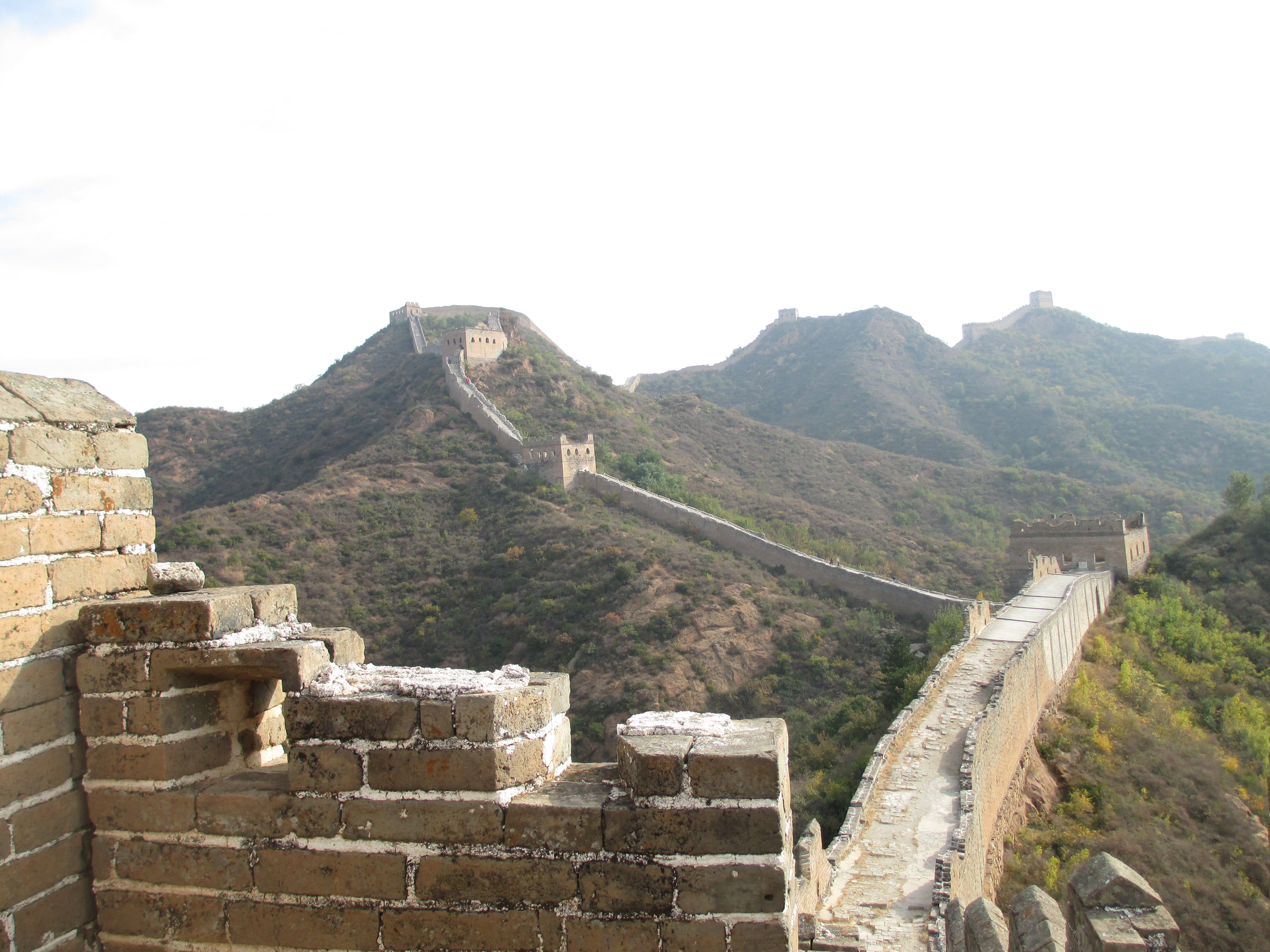
I’m here standing in front of a strange house, looking at lush mountains and the, THE Great Wall of China, and listening to the group next to me arguing. What was previously a conversation suddenly escalated into an argument, so I’m in front of this beautiful view and listening to conflict at the same time. It’s quite surprising, really.
The premise behind pilgrimages (religious or otherwise) is this: making a journey to visit sacred sites, as a way to explore the world while exploring yourself. In presence of great monuments or sacred locations, our behavior tend to change, for mysterious reasons. Perhaps we were so moved by the history. Perhaps we don’t feel anything, but our subconsciousness resonate with the pulse of what happened in these sites. I did the Hajj pilgrimage several years ago, and we were always warned that people behave differently in these journeys. Married couples fight more, and some end up in divorce. Some become more hostile, others more reverent. Because the Hajj is supposed to be the simulation of afterlife, this change of behavior is attributed as the emergence of our real selves.
Maybe this is true not just for religious pilgrimages. Visiting the Great Wall is nothing short of a pilgrimage, for it took us a long time to get here, and we were purposefully placed in uncomfortable situations (that bathroom is just unspeakably primitive for some of us), and yet we were all in awe of what we are witnessing. As the people next to me were arguing, I wondered how many more fights had occurred before this Wall. This being built for defense reasons, I’m sure it has seen many battles, many deaths, but there are the small arguments too, I bet. The small conflicts between guards and tourists. Children complaining of boredom. Couples bickering over how far they’d like to explore.
So how did this happen? In class we often talked about how leaders don’t have the time and space to reflect. It’s hard to gauge what that really means, but this specific instance helps. We are never encouraged to stop and look around. So when we “visit” a site, we don’t really have a clear idea on how to do it. We come, climb up, then we are supposed to gaze into the view with silence. For some people, this is a very hard thing to do. It feels awkward and slow. Some yearns for a sort of stimulation. We need to do SOMETHING, said the voice in our head, and looking at the view is not considered an action. It’s too empty and devoid of meaning. There has to be something we can do, or something we can say. Perhaps if I say something out loud, things wouldn’t feel so awkward?
There are exceptions, of course, and some people loved to be out in nature and let their mind wander, as it’s their greatest source of inspiration. But most people not, and perhaps that’s why they turn to each other for something to do. The Wall is not going to speak.
October 18th, 2013
Boy, this has been a difficult trip. And it’s not over yet. Luckily this is a travel day – 5 or 6 hours in a bus with what I’ve been told are breathtaking views, and hopefully some silence.
We took a bus from Li Jiang at around 10 AM, departing for Shangri-la. I announced “Who do I have to lobby to get a window seat?” and was rewarded with a window seat. I’ve been warned about motion sickness and altitude sickness, and my seat-mate Sarah promptly fall asleep as soon as we depart, in order to avoid both sickness.
I don’t know why I find the idea of looking outside a window in a moving vehicle so tempting, but I do. In reality, it can be pretty depressing. Like my post about the Great Wall, this is an example where you’re required to sit in silence and take everything in. If you’re in a rather somber mood, like I was at the time, it could lead to severe (though invisible) self-beating.
But you can only be mean to yourself for so long, and 5 hours was more than enough for ups and downs. After a while, the views became breathtaking, to the point where I was smiling to myself and pressing my face against the window. Then something happened and I got an idea – and this moment when the idea appeared is one of my favorite moments of this entire trip.
I had been thinking about our team presentation. We had planned to show each interview with a slide with a picture and a quote. This was a good idea, and the challenge is this: if the quote is the strongest part of the presentation, then what will we say when the quote appears on the slide? Will we just be reading the quote, committing the greatest sin of presentation (“Thou shalt never read from the slide”)? Or should we provide context, forcing the audience to read the quote and listen to us at the same time?
It dawned on me that for the quotes to work, the audience need to see it as if the stories come alive. We need to add another layer to the stories. That’s how I realized that we need to tell the stories on a first-person perspective. We – the presenters – will basically disappear, and the audience can look at the face of each person we interviewed, read their quote, and listen to the story as we have heard it ourselves. It wouldn’t be exactly the same, of course. Perhaps 30 seconds per story? The point is, this way we would get to present without actually being present – and the idea of disappearing behind a presentation is even more tempting to me than looking outside a window on a moving vehicle. We would be there, but we wouldn’t be there. We would not be the center of attention, but we would be able to capture everyone’s attention. I love it. I shall share this with the rest of the group when they regained consciousness.

 Tika Anindya